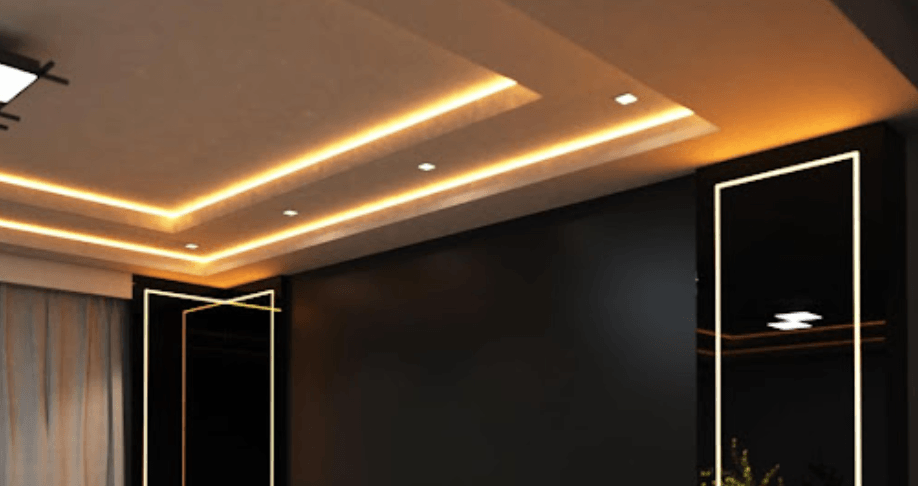
LED strip lighting can suit many different projects, from home decoration and furniture lighting to architectural features, signage, corridors, and commercial spaces. However, choosing the right strip is only one part of the planning process. The power supply, installation environment, voltage, total length, and expected brightness also need attention.
A well planned lighting system starts with understanding where the strips will be installed and what kind of lighting effect is required. Indoor cove lighting may need different specifications from an outdoor architectural installation. Similarly, a short decorative installation has different power requirements from a long commercial project.
Identify the Right LED Strip for the Application
LED strips come in different LED types, voltages, sizes, power ratings, colors, and protection levels. SMD5050, SMD3528, SMD2835, SMD3014, COB, and silicone neon strips can serve different lighting purposes.
For example, a 5050 strip can be used for cove lighting, signage backlighting, architectural lighting, holiday decoration, and home projects. Some 5050 models contain 300 LEDs per five meter reel and can operate at either 12V DC or 24V DC. Waterproof versions can also provide IP65 or IP68 protection for applications where moisture is a concern.
COB strips are another option when continuous illumination is important. Their closely arranged light sources can create a smoother appearance with fewer visible spots. This can be useful for areas where the strip remains directly visible.
Calculate Total Length and Power Requirements
Before purchasing LED strips, measure the complete installation area. Then determine the required strip length and check the wattage per meter.
For example, if a project needs 10 meters of strip rated at 12W per meter, the basic power requirement is 120W. The power supply should have enough capacity to handle the calculated load without operating continuously at its maximum limit.
Voltage also matters. A 24V system generally experiences less voltage drop over longer runs than a 12V system. With 12V strips, brightness can gradually decrease toward the end of a long installation if the wiring and power distribution are not planned properly.
What to Consider When You Buy Bulk LED Strip Lights
When you buy bulk LED strip lights, look beyond the total quantity. Check the voltage, LED density, power consumption, cutting length, PCB dimensions, color, and protection rating.
Consistency is particularly important for larger projects. Using strips with different specifications can result in visible differences in brightness or color. It is also useful to confirm the reel length and cutting interval before installation. For instance, some 24V strips can be cut every six LEDs, while other models have different cutting points.
Installation requirements should also influence the selection. A 5050 strip measuring 5000mm by 10mm may be suitable for various applications, while narrower strips can work better in restricted spaces.
Choose the Appropriate LED Power Supply
The power supply should match the LED strip voltage. A 12V strip requires a suitable 12V power source, while a 24V strip requires a 24V power source. Connecting a strip to an unsuitable voltage can cause poor performance or damage.
The power rating is equally important. Calculate the total wattage of the connected strips and choose a power supply with adequate capacity. For larger systems, dividing the installation into sections can make power distribution easier and help reduce voltage drop.
A suitable power supply also depends on the installation environment. Indoor projects may use an IP20 unit where there is no exposure to moisture. Outdoor or damp locations may require rainproof or waterproof protection.
For projects that require regular sourcing and consistent specifications, LED Power Supply Wholesale can be considered as part of the overall planning process. The key point is to match the power supply specification with the actual electrical requirements of the LED strips.
Consider the Installation Environment
The environment affects both strip selection and power supply selection. Indoor lighting generally has fewer protection requirements, while outdoor installations need greater attention to water and dust exposure.
IP65 and IP68 LED strips can be considered for applications where protection from moisture is required. IP68 models can provide a higher level of water protection and may be suitable for demanding installations when their specific product rating matches the intended use.
Heat should also be considered. Power supplies need suitable ventilation, and LED strips should be installed on appropriate surfaces when heat management is important.
Position and Connect the Power Correctly
Long LED strip installations require careful wiring. Excessively long continuous runs can increase voltage drop, particularly with lower voltage systems. Splitting a project into shorter sections and distributing power properly can help maintain more consistent brightness.
Controllers also need to match the strip type. For example, an RGB touch controller can operate within a 12V to 24V input range and support multiple color modes. Correct wiring polarity is essential, especially with DC LED systems.
Common Mistakes to Avoid
Several problems can be prevented through basic planning. Using the wrong voltage is one of the most serious mistakes. Another is choosing a power supply that cannot handle the total load.
Other common issues include ignoring voltage drop, using indoor-rated equipment in exposed locations, mixing incompatible LED specifications, and failing to check cutting intervals before installation.
It is also important to follow the manufacturer’s installation requirements. Some strips use 3M adhesive backing, while others may require aluminum profiles or additional mounting accessories.
See also: VIP Peptide: One Negative Trial, Three Hopeful Animal Studies, and the Math of Choosing a Provider
Create a Simple Specification Checklist
Before placing an order, record the main specifications in one place. Include the LED type, voltage, wattage per meter, total length, color temperature, LED density, cutting length, PCB dimensions, and IP rating.
For the power supply, record the required voltage, total wattage, protection level, and installation environment. This makes it easier to compare different options and reduces the chance of ordering incompatible components.
Shenzhen Dekingled Co., Ltd. was established in 2014 and operates from SanMing Industrial Park, Shiyan Town, Bao’an District, Shenzhen, China.
The company lists fast delivery, cost-effective solutions, technical support, and quality focused manufacturing among its service advantages.
Build the System Around Compatibility
A successful LED strip project depends on compatibility between the strip, power supply, controller, wiring, and installation environment. Start by calculating the required length and power. Then select the voltage, protection level, and LED type according to the application.
For larger projects, careful specification checking can prevent problems during installation and operation. A practical approach is to treat the LED strip and its supporting components as one complete system rather than selecting each part separately.