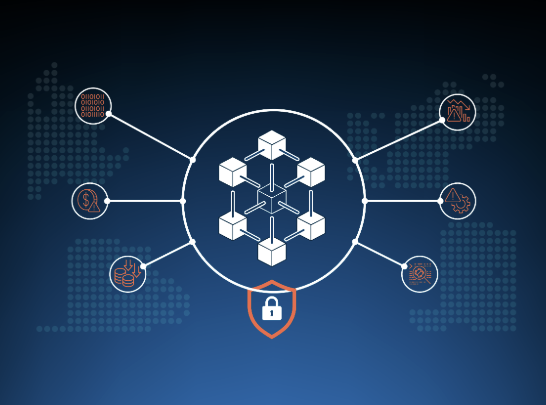
Blockchain-driven finance is reshaping capital markets with secure, immutable ledgers that record every transaction. Tokenization and cross-border rails promise greater liquidity and faster settlement, while trusted automation provides verifiable actions and audit trails across systems. As interoperability expands, governance models and privacy controls become central to regulatory alignment. The trajectory suggests broader inclusion and efficiency, but the balance of openness, risk, and compliance remains unsettled—a frontier where standards and modular governance will determine practical outcomes.
What Blockchain Means for Finance Today
Blockchain technology is redefining capital markets, payments, and asset management by providing a secure, immutable ledger that transparently records every transaction.
The analysis maps cross-border settlement, tokenization, and programmable compliance to efficiency gains, while highlighting governance, interoperability, and data sovereignty.
Privacy preservation and liquidity fragmentation emerge as critical tensions, demanding modular architectures, standardized protocols, and real-time risk metrics for empowered, freedom-oriented financial ecosystems.
How Trusted Automation Is Reducing Settlement Times
Trusted automation, leveraging verifiable execution and standardized protocols, is materially shortening settlement cycles by executing verifiable actions across counterparties and post-trade systems in near real time.
Data indicates accelerated clearance, reduced operational risk, and transparent audit trails.
Speedy settlements emerge through automated reconciliation, machine-readable confirmations, and cross-system interoperability, enabling resilient, scalable markets while preserving autonomy and trust in decentralized operations.
Tokenization and Cross-Border Rails: New Openness
Tokenization and cross-border rails are expanding openness in financial markets by converting assets into standardized, tradeable tokens and coupling them with interoperable settlement rails. This venture yields measurable liquidity gains, transparent ownership trails, and reduced frictions across jurisdictions.
tokenization implications include enhanced fractional ownership and programmability.
Cross border rails enable synchronized settlement, enabling scalable, permissioned access while preserving sovereignty and competitive freedom.
Navigating Risk, Privacy, and Regulation in DeFi
How can DeFi systems balance risk, privacy, and regulatory compliance as they scale? Continuous monitoring, modular governance, and transparent risk budgeting frameworks enable scalable resilience without compromising trust. Data-driven risk budgeting quantifies exposure, while privacy tradeoffs are evaluated through formalized tradeoff analyses. Regulatory alignment emerges from verifiable compliance signals, interoperable standards, and auditable privacy controls, guiding resilient, freedom-preserving innovation in decentralized finance.
Frequently Asked Questions
How Will Central Banks Adapt to Blockchain-Based Monetary Policies?
Central banks will adapt through hybrid frameworks, advancing digital currencies, programmable policy tools, and stress-tested interoperability within blockchain finance; monet policy evolves via data-driven, transparent mechanisms. Career paths expand into central-bank tech units, risk analytics, and policy engineering for this transition.
What Are the Career Paths Emerging From Blockchain Finance?
Emerging roles include blockchain data architects, smart-contract auditors, tokenomics analysts, compliance engineers, and DeFi risk managers; career paths evolve through cross-disciplinary tracks in cryptography, fintech policy, and platform governance, emphasizing scalability, security metrics, and auditable transparency for autonomous financial systems.
Can Blockchain Reduce Fraud Beyond Settlement Efficiency Gains?
“To be frank,” blockchain can reduce fraud beyond settlement efficiency by enhancing blockchain security and enabling fraud analytics; data integrity and traceability shrink illicit activity, while transparent audit trails support proactive risk management for a freedom-seeking, forward-looking audience.
See also: madamekafussu
How Will Energy Use Impact Scalable Blockchain Finance?
Energy use will shape scalable blockchain finance, balancing energy efficiency with robust consensus optimization; mining incentives align with throughput, privacy compliance standards, cross border interoperability, and token ergonomics, guiding data-driven, forward-looking deployment for freedom-seeking communities.
What Governance Models Best Balance Innovation and Safety?
Governance experiments balance innovation and safety by combining modular, risk-tolerant frameworks with adaptive policy levers; they enable scalable experiments while preserving safeguards. These structures support data-driven decisions, forward-looking risk controls, and freedom-minded, resilient decentralization.
Conclusion
In a world where ledgers hum in unison, finance breathes through programmable contracts and auditable footprints. The data speak: settlement times shrink, cross-border rails glitter with openness, and tokenization unbinds illiquid assets. Yet the spreadsheet of risk, privacy, and regulation remains stubbornly open to revision. Satire aside, trusted automation and modular governance steer toward resilient markets, not perfection. The forecast is clear: a more efficient, interoperable, and accountable financial future—provided governance keeps pace with innovation.